The Pangolin Shield
London, United Kingdom, 2026
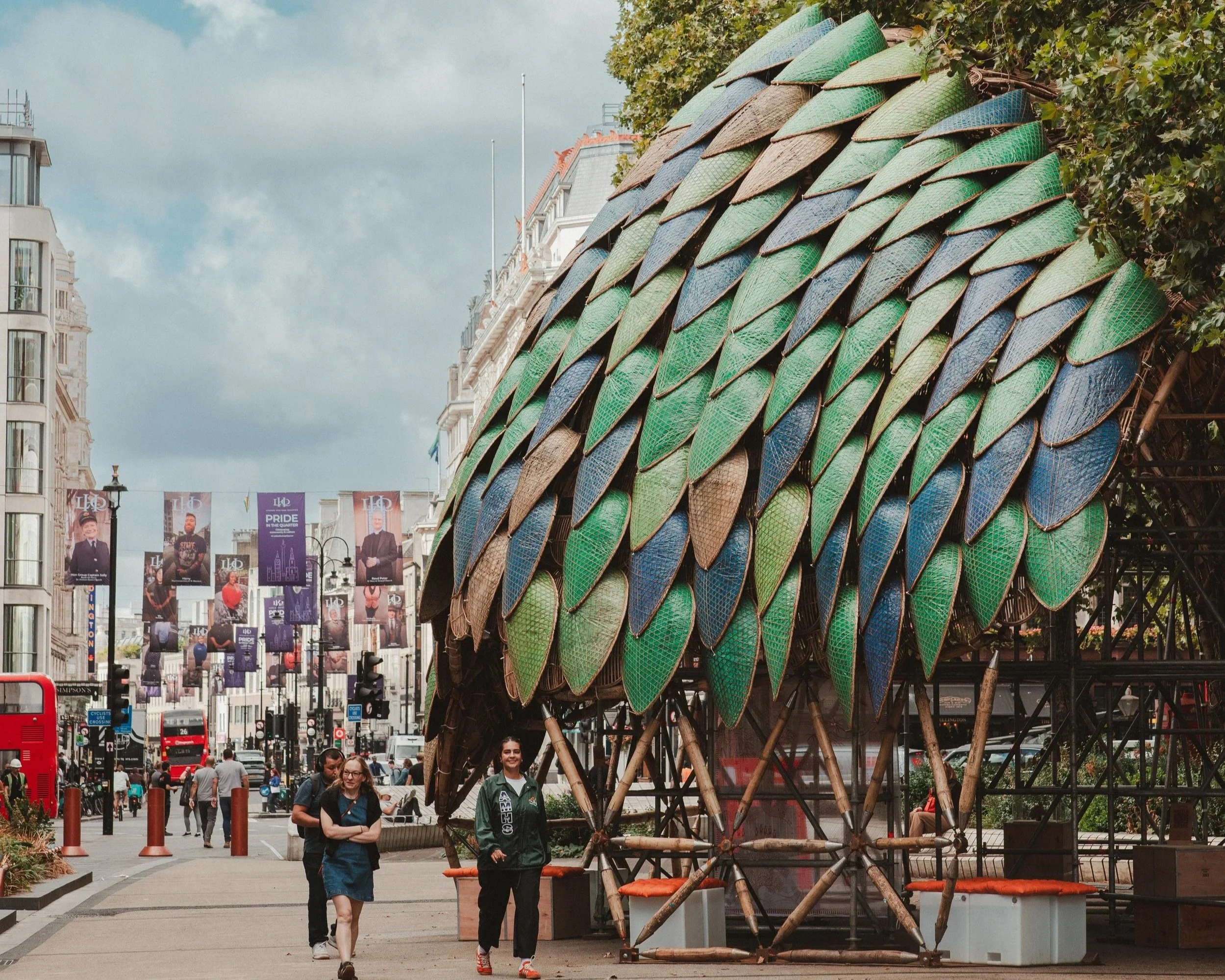
Photo by Taran Wilkhu
About the Project
“This pavilion is crafted in every sense of the word: in terms of how we think about its construction, and in the idea that we can use technology to simplify what would once have taken a lot of time to do by hand. But then we use our hands to make it. It’s the best of both worlds; a joyful piece of co-creation" - Ananya Singhal, Studio Saar
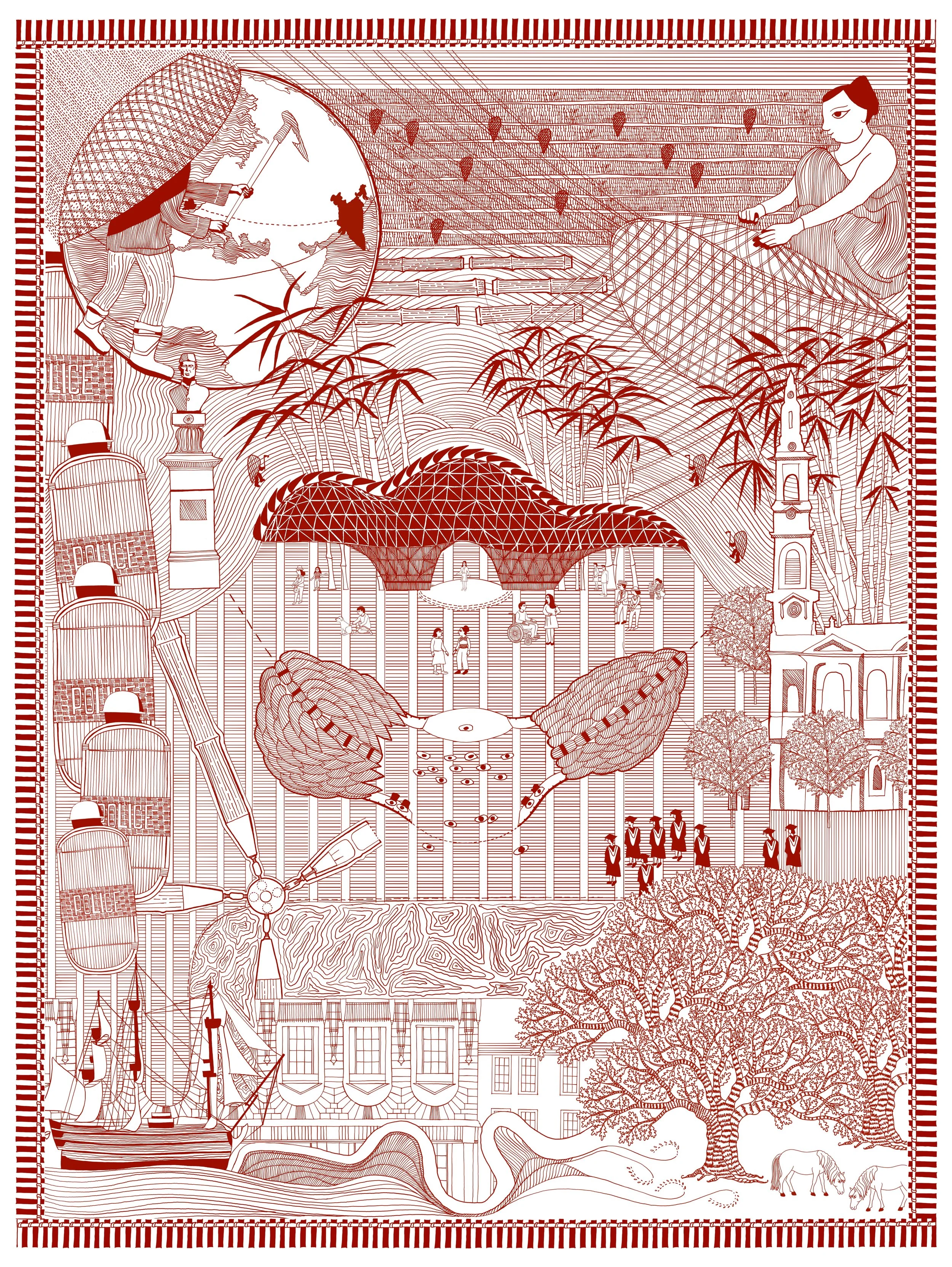
Created as a landmark installation for the London Design Festival 2026, The Pangolin Shield is a temporary bamboo pavilion co-designed by Studio Saar and Atelier One. Sited on the pedestrianised Strand in central London, the structure is inspired by the defensive, overlapping scales of the pangolin.
The primary envelope features two layered skins: traditional police shields made from cane (lathis) associated with British colonial administration in India, and hand-woven rain shields (knups) from Meghalaya, which experiences some of the heaviest rainfall on Earth. The duality of these two items, one associated with violence and the other with protection, reflects the pangolin’s own vulnerability. The defensive scales, which protect it from predators, are sought after for use in medicines, resulting in the pangolin becoming the most trafficked mammal in the world.
Courtesy of Studio Saar
The Process
The primary load-bearing structure is an 8m high triangulated bamboo grid shell. Starting from initial architectural sketches, dynamic relaxation was applied as a computational form-finding methodology to optimise the overall geometry. This shape-optimisation minimised internal bending moments and shear stresses across the framework, enabling structural loads to be transferred primarily through axial tension and compression. Computational Fluid Dynamics (CFD) was then used to accurately assess the wind loading on the atypical form.
Working with natural bamboo required addressing the material's inherent non-uniformity in section diameter, wall thickness, and curvature. Rather than selecting only uniform poles, the engineering strategy accommodates natural variations through computational modelling paired with precision-engineered connectors. The connectors absorb spatial dimensional tolerances at the node joints while cleanly transferring forces across the triangulated lattice.
Utilising the high strength-to-weight ratio of bamboo’s natural tubular profile enabled a low-mass structure that minimised material consumption and embodied carbon footprint.

Photo by Taran Wilkhu
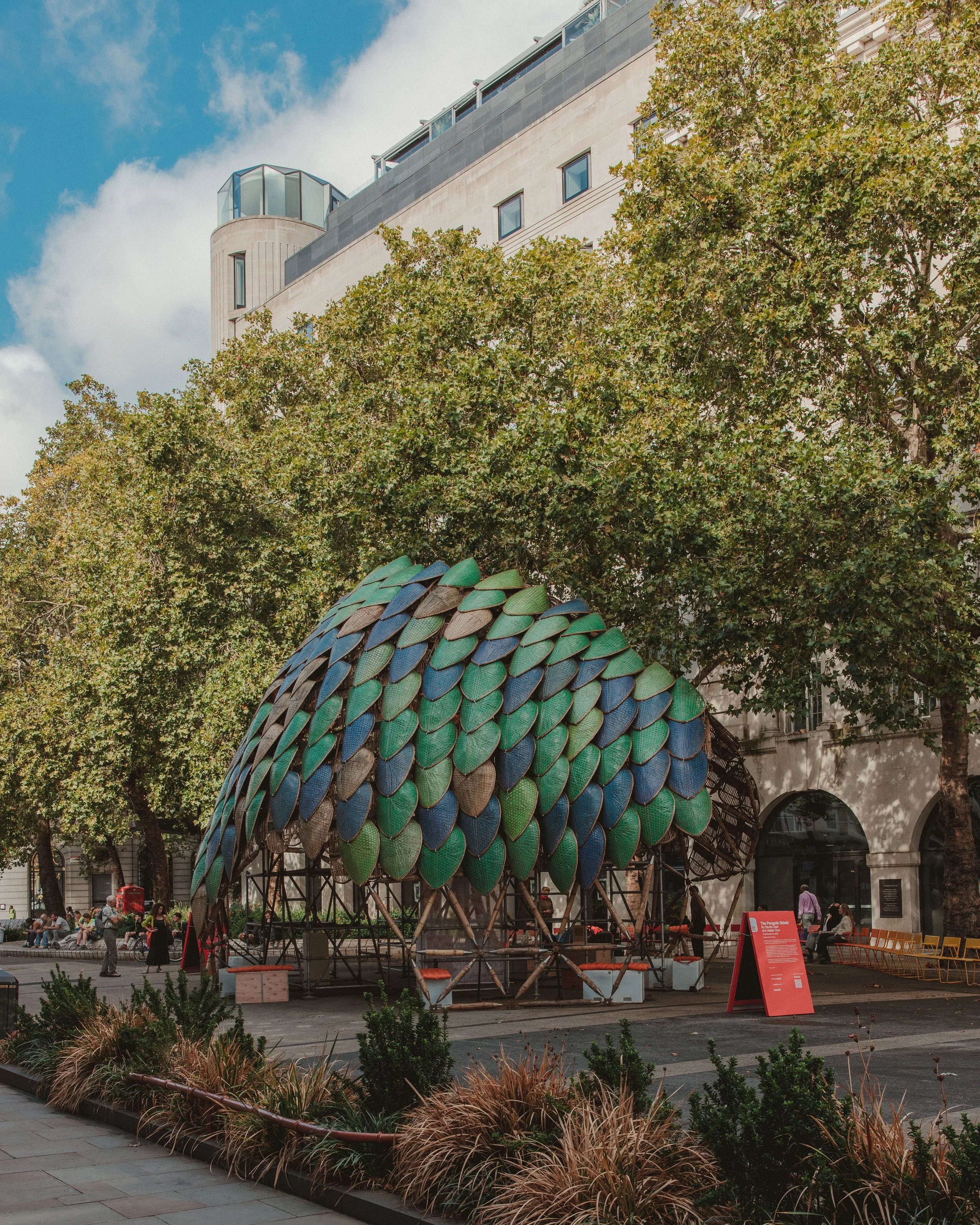
Photo by Taran Wilkhu
The Outcome
Located on the Strand between the bust of Jawaharlal Nehru outside the Indian High Commission and Somerset House, the pavilion engages directly with its historic surroundings. By reinterpreting tools of state control and rural survival as a shared shelter, the project encourages reflection on historical legacies and cultural exchange.
The completed pavilion demonstrates how digital form-finding and adaptable connection design can unlock the structural efficiency of non-standard natural materials for urban installations.
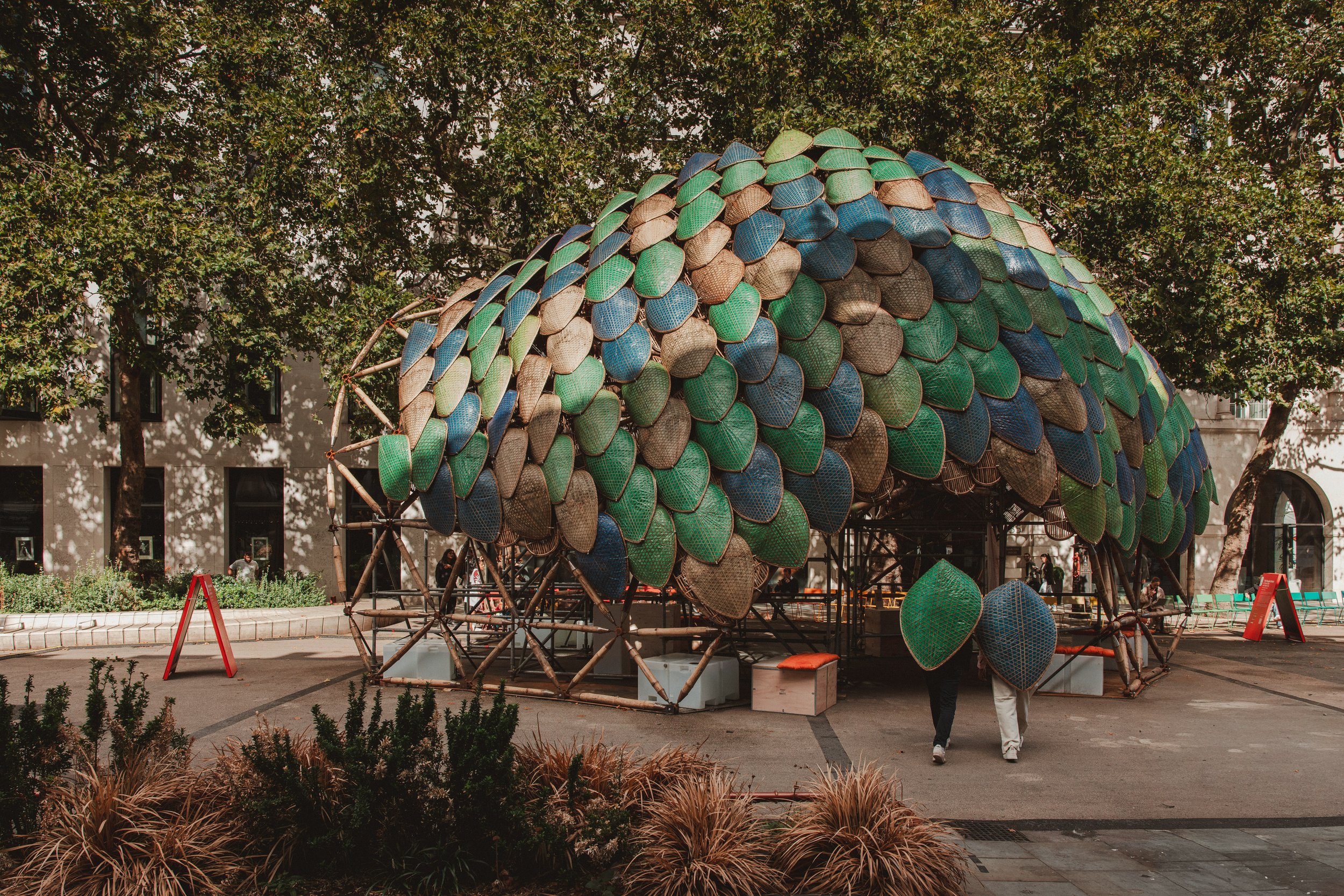
Photo by Taran Wilkhu
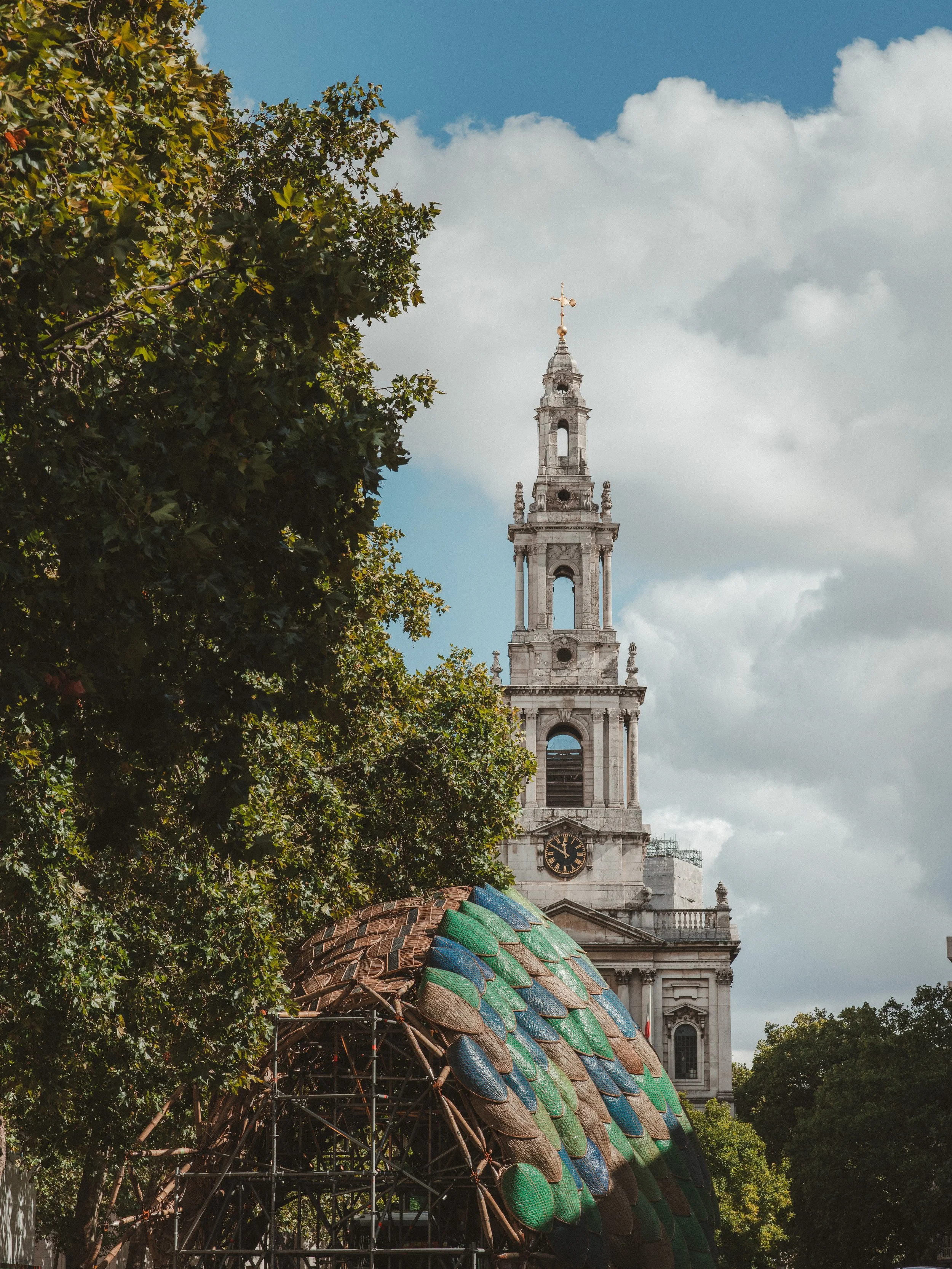
Photo by Taran Wilkhu
Credits
Design: Studio Saar, Atelier One
Structural Engineering: Atelier One
Supporters: Secure, London Design Festival
Contractors: Setsquare Creative
Photography: Taran Wilkhu, Studio Saar
Press
The Pangolin Shield – London Design Festival
Pangolin Shield – Architecture today
Studio Saar tops LDF pavilion with Police and Rain Shields – Dezeen
The Pangolin Shield: How Bamboo, Computation and Craft Are Reimagining the Pavilion – Parametric Pavilion